Ransomware leak sites: naming victims, double extortion, and what defenders learn from them
Updated
A ransomware leak site is a public page run by an attacker to name an organization and threaten to release stolen data. It is the pressure side of double extortion: encryption blocks operations, and the listing adds regulatory, legal, and reputational risk. This page explains that model, how listings turn into open-source intelligence for defenders and reporters, and how police sometimes seize leak-site infrastructure, without pointing anyone at criminal services. Ransomware crews overlap with the wider underground described on darknet economy and darknet markets; dedicated stolen-data shops are a related but separate channel, and sustained enforcement against both is covered on darknet enforcement.
What ransomware leak sites are (and what they are not)
The U.S. Cybersecurity and Infrastructure Security Agency defines double extortion as exfiltrating victim data and pressuring payment by threatening to release it, sometimes alongside encryption and sometimes without ransomware at all. Its #StopRansomware guide treats both tactics as one evolving extortion model. A dedicated leak site (also called a data leak site or extortion blog) is where that threat becomes public: the operator adds a company name, may show partial files, and may set a deadline before fuller disclosure.
That is not the same as a legitimate breach notification site run by a victim or regulator. Palo Alto Networks' Cyberpedia entry on dark web leak sites draws that line explicitly: notification sites inform affected people; criminal leak sites shame victims to extract payment. Readers comparing underground commerce should also see darknet market history, where public naming and escrow scams follow different incentives.
How double extortion uses a leak site as leverage
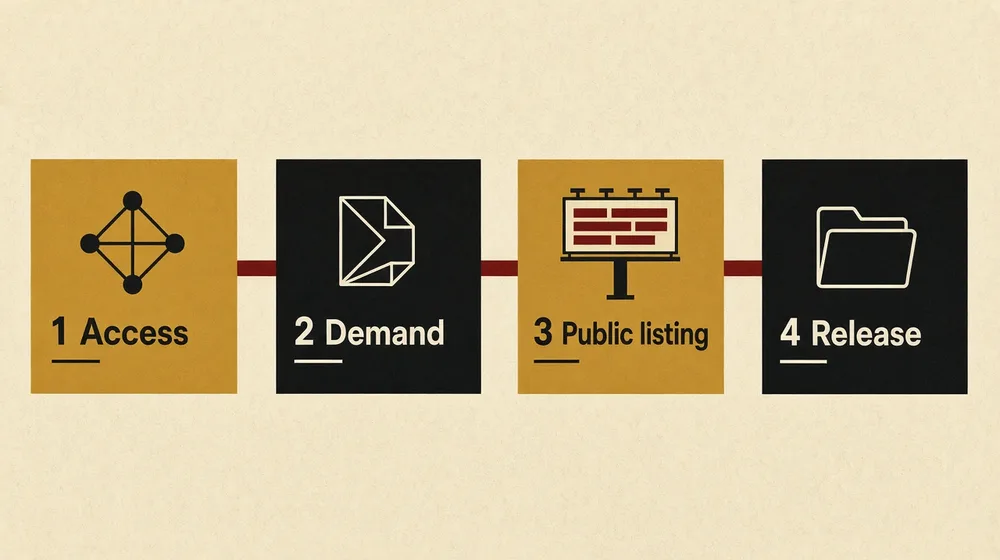
Joint government advisories describe a repeating sequence. Affiliates gain access, move through the network, and steal files. They deploy ransomware or rely on theft alone, leave a ransom note, and open negotiations through separate channels. If payment does not arrive, the victim may appear on the group's leak site. CISA's Black Basta advisory says ransom notes typically give victims between ten and twelve days before data is published on the group's Tor listing page. Its RansomHub advisory notes deadlines between three and ninety days depending on the affiliate, reflecting how varied the pressure campaign can be.
The leak site turns a private incident into a broadcast event. Customers, employees, and partners may learn of a compromise from a criminal blog before a formal statement exists. That is why legal and communications teams treat a listing as a crisis trigger even when encryption is already contained. Payment in cryptocurrency, covered in broad terms on darknet crypto, is only one leg of the scheme; the public naming is designed to raise the cost of refusing to pay.
| Stage | What attackers do | What the leak site adds |
|---|---|---|
| Access and theft | Initial compromise, lateral movement, bulk exfiltration | Nothing yet; stolen data is held in reserve |
| Demand | Ransom note, negotiation channel, encryption in many cases | Threat that non-payment leads to publication |
| Listing | Operator adds victim identity and narrative | Public shame; may include file samples or timers |
| Release or sale | Full dumps, auctions, or cross-posting to other blogs | Pressure continues; data may surface in stolen-data markets |
How defenders, journalists, and researchers use leak-site data
Security teams watch leak sites not to browse stolen files but to catch early warnings. A new listing may be the first signal that a corporate name in threat feeds matches an active ransomware affiliate. Analysts track which sectors appear repeatedly, whether a group's posting tempo changes, and whether multiple brands reappear after a law-enforcement action. Vendor explainers such as Searchlight Cyber's overview of leak-site intelligence describe the same workflow: treat the site as attacker-controlled OSINT with heavy caveats.
Journalists use listings to ask timely questions, not to treat criminal copy as fact. A name on a blog does not prove scope, and operators exaggerate or duplicate victims. Outlets that maintain independent indices, such as Ransomnews' description of its Ransomtracker, separate operator claims from corroborated incidents. That distinction belongs in any story sourced from a leak site. Researchers studying ransomware-as-a-service note that leak sites also advertise affiliate programs, which ties the extortion economy to recruitment on forums discussed under darknet news.
Responsible use means never downloading or republishing stolen personal data, working from metadata where possible, and pairing a listing with victim statements, SEC or ICO filings, and agency advisories. CISA's group-specific #StopRansomware pages are often the fastest official context once a family is identified.
When police take over leak-site infrastructure: Operation Cronos
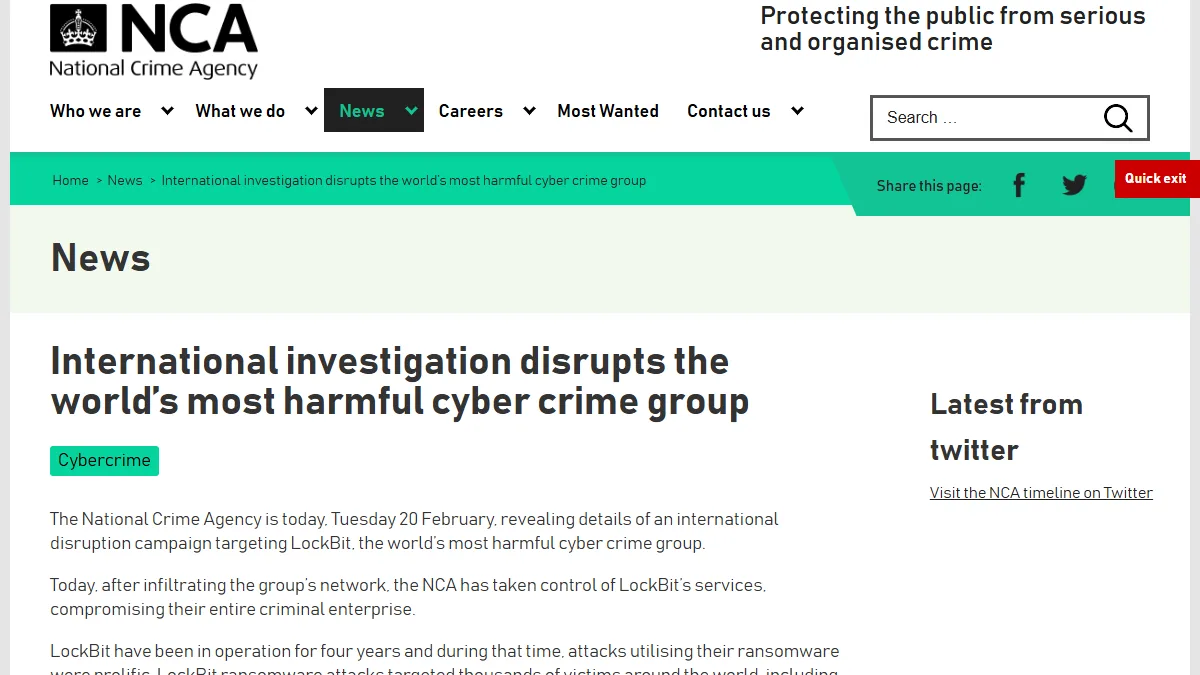
Leak sites are not untouchable. On 20 February 2024 the UK National Crime Agency announced Operation Cronos, a task force that infiltrated LockBit's network and took control of services including the group's public leak site on the dark web, where it had hosted stolen data. The NCA said it would post information exposing LockBit's operations on that seized site during the following week. The same day, the U.S. Department of Justice announced parallel charges and infrastructure seizures, stating that LockBit had targeted more than 2,000 victims and received more than $120 million in ransom payments.
Europol's 20 February 2024 release added operational detail: law enforcement from ten countries, 34 servers taken in multiple jurisdictions, two arrests in Poland and Ukraine, more than 200 frozen cryptocurrency accounts, and over 1,000 decryption keys recovered for victims. The NCA described separate seizure of LockBit's StealBit exfiltration tooling and 28 affiliate servers. The FBI's 20 February 2024 remarks noted four U.S. servers seized and nearly 11,000 domains and servers disrupted globally in that phase.
Disruption is not always permanent. Groups rebrand, spin up replacement blogs, and affiliates migrate. That is why darknet enforcement treats takedowns as campaigns, not single events. LockBit's case shows both technical seizure and public messaging on the same channel the criminals used for intimidation.
| Source | Claim |
|---|---|
| U.S. Department of Justice | More than 2,000 LockBit victims; over $120 million in ransom payments received |
| Europol | 34 servers seized; 2 arrests; 200+ cryptocurrency accounts frozen; 1,000+ decryption keys |
| UK National Crime Agency | Control of LockBit leak site and admin environment; StealBit and 28 affiliate servers seized |
| FBI | 4 U.S. servers seized; nearly 11,000 domains and servers disrupted in the operation described |
Leak sites, stolen-data shops, and the wider darknet
Leak sites pressure one victim at a time. Bulk resale of credentials or databases often moves to forum sales or dedicated shops, which stolen-data shops examines on its own page. Government advisories increasingly describe groups that publish on a leak blog and later offer datasets for sale. CISA's Gunra advisory documents a double-extortion program that, by early 2026, advertised datasets on its leak presence and recruited affiliates through underground channels. The overlap explains why market watchers on darknet markets sometimes see the same breach name in both a ransomware listing and a shop listing weeks apart.
Neither channel is a safe place to "verify" a breach personally. Handling stolen data can violate law and policy regardless of whether it appeared on a leak blog or a market listing. Defenders belong on their own telemetry, legal counsel, and official notifications.
How we know what we say about ransomware leak sites
Definitions of double extortion and leak-site behavior come from CISA's #StopRansomware guide and joint advisories cited above. Operation Cronos figures come from the 20 February 2024 releases by the National Crime Agency, Justice Department, Europol, and FBI. We have not accessed any leak site or negotiation portal. Claim labels and source rules are in our editorial standards.
Ransomware leak sites: common questions
What is a ransomware leak site?
It is an attacker-run site that names organizations and threatens to publish stolen data to increase pressure to pay. CISA treats that public-release threat as the hallmark of double extortion alongside encryption.
How does double extortion ransomware work?
Intruders steal data, demand payment, and use a leak site to expose the victim's name and sometimes file samples if talks fail. Deadlines vary by group; Black Basta's advisory cites roughly ten to twelve days in many cases.
Are ransomware leak sites only on the dark web?
Many are hosted on anonymity networks, but advisories also describe clearnet mirrors for some programs. Location does not change that the content is criminal extortion material.
How do security teams and journalists use leak-site listings?
They monitor names and timelines as early warning, then verify through victims and regulators. Indices such as Ransomtracker explicitly treat entries as unverified operator claims until corroborated elsewhere.
Can police seize or replace a ransomware group's leak site?
Yes, temporarily. In Operation Cronos, announced 20 February 2024, UK and U.S. agencies said they seized LockBit infrastructure including the leak site used to host victim data.
Is a ransomware leak site the same as an official breach notification page?
No. Notification pages inform affected people lawfully; leak sites are run by criminals to shame victims, as described in vendor and agency guidance on dark web leak sites.
What happens on a leak site if a victim does not pay?
Operators may publish more data, repost under a new brand, or funnel datasets toward underground sales. Exact steps depend on the affiliate; government advisories focus on preparation and reporting rather than predicting a single outcome.