Darknet markets in 2026: which are trading and which are gone
Updated
Four darknet markets are still trading in 2026, and two that people keep checking are gone. Torzon, DrugHub, WeTheNorth, and Black Ops are trading; DarkMatter and Nexus both blocked withdrawals between about 20 and 30 September 2026, in exit scams. The roster was reshuffled in the summer of 2025, when Archetyp was seized by German police in June and Abacus went dark in July with customer funds inside. Each market is a different kind of business, with different coins, different escrow, and a very different track record, and the table below puts them side by side. Each name has its own page for the story behind it.
| Market | Kind | Since | Coins | Escrow | Our read |
|---|---|---|---|---|---|
| Torzon | Generalist | September 2022 | BTC, XMR | Market-held; finalize-early for established vendors | The biggest English-language market since Abacus closed; captcha updated October 2026 |
| DrugHub | Drug-focused | August 2023 | XMR only | Market-held, no multisig | Run by the White House Market team; the longest pedigree of the six |
| WeTheNorth | Regional, Canada | July 2021 | BTC, XMR | Market-held, no multisig | Canada-only, English and French; the oldest of the six; captcha updated November 2026 |
| DarkMatter | Monero-first generalist | November 2022 | XMR | Walletless checkout, optional 2-of-3 multisig | Exit scam, September 2026: withdrawals blocked |
| Nexus | Generalist | Late 2023 | XMR default, BTC | Advertised as 2-of-3 multisig | Exit scam, September 2026: withdrawals blocked |
| Black Ops | Generalist, large digital-goods section | September 2024 | XMR; BTC added April 2026 | Market-held, no multisig | The youngest; heavily impersonated on clearnet |
Gone, and still searched for: DarkMatter and Nexus (both exit scams, withdrawals blocked from about 20–30 September 2026), Abacus (2021 to July 2025, exit scam), Archetyp (seized June 2025), BidenCash (stolen-card shop, seized June 2025), and Incognito (exit scam and extortion, March 2024). How each of those ended is on darknet news.
What counts as a darknet market
A darknet market is a Tor site where many independent vendors list goods, buyers pay in cryptocurrency, the market holds the payment in escrow until delivery, and both sides leave ratings. That model came from Silk Road in 2011 and has barely changed since. The operator does not sell anything; it rents out the storefront, the messaging, the dispute desk, and the escrow, and takes a commission, usually around five percent, on every sale.
Drugs are the bulk of what moves on the generalist markets, with fraud goods, counterfeit documents, and digital products in the side aisles. Most markets ban a short list of categories, typically weapons, explosives, and child abuse material, partly to keep police attention down and partly because buyers expect it.
Two other things get called “darknet markets” or “dark web marketplaces” and are not the same business. Stolen-data shops sell logs, cards, and network access to fraudsters, and are covered below. Clearnet “official link” sites are not markets at all: they are ordinary websites that rank for a market’s name and hand out addresses, often phishing ones. Both crowd the search results for this phrase.
How escrow, commissions, finalize-early, and vendor bonds actually work, and why they explain every exit scam, is on the darknet economy page.
Best darknet markets: what “best” can honestly mean
Two of the six, DarkMatter and Nexus, exited in September 2026. They stay in the comparison because the exits are the most useful thing to learn from.
There is no honest “best darknet market”. What there is: clear answers to the specific questions people use the word “best” to mean.
- Biggest
- Torzon, by a long way. It had been running since 2022, took most of the vendors who left Abacus in July 2025, and in 2026 its catalogue runs well into five figures. Size is also its weakness: a market this large holds a very large escrow balance, and that balance is what exit scams take.
- Longest track record
- DrugHub, through its operators rather than its own age. The team behind it ran White House Market from 2019 to 2021 and closed it with a signed retirement that let users withdraw. That is the best exit history any market team has. It does not guarantee the next one.
- Safest custody design
- DarkMatter, on paper, and it exited in September 2026. Walletless checkout and optional 2-of-3 Monero multisig were the best design on the list, but the default order was single-signature, and the exit showed that a design is not a record. Among markets still trading, none offers multisig.
- Built for one country
- WeTheNorth, for Canada. Prices in Canadian dollars, support in English and French, domestic shipping as the selling point. It is useless if you are not in Canada and was never meant to be anything else.
- Least proven
- Black Ops, launched September 2024. It has a large catalogue and no long history, and its clone sites go further than most, writing it a history it never had.
- Least documented
- Nexus, which exited in September 2026. Almost everything written about it came from its own promotion, repeated across dozens of sites, and its multisig and security claims were never shown working in public.
Trusting a market means leaving your coins in its escrow. Abacus was the largest Western market in the spring of 2025 and exited that July; DarkMatter and Nexus followed in September 2026. Evolution was the most trusted in early 2015 and took about $12 million in escrowed bitcoin when it went.
Stolen-data shops are a separate business
Most of what security news calls “dark web markets” are not drug markets. They are shops selling stolen cards, stealer logs and network access to fraudsters and ransomware crews: single-operator storefronts, often without escrow, selling goods that are copied rather than shipped. When U.S. and Dutch authorities seized BidenCash on 4 June 2025, the shop had more than 117,000 customers and had sold more than 15 million card numbers. How the trade works, what the takedowns show and what to do if your data is exposed are on stolen data shops; the gangs that publish stolen company data are on ransomware leak sites.
How 2025 reshaped the market list
Four events reshaped the English-language field in 2025, and they are often mashed into one “crackdown”. They had different causes and different consequences.
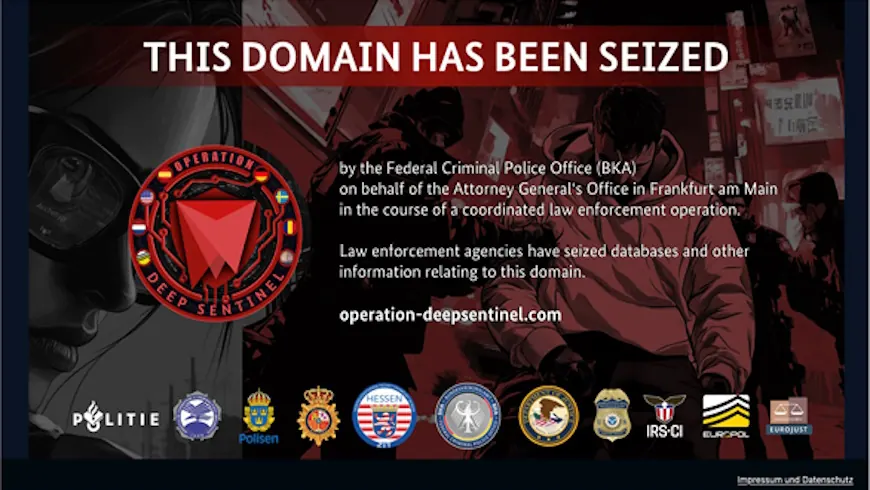
Archetyp (the full dated record is on darknet market history) was seized in June 2025 in Operation Deep Sentinel, and its alleged founder, a 31-year-old German, was arrested in Barcelona on 11 June. The German indictment of 3 August 2026 describes the biggest drug market in the world at the time: about 2.3 million orders and €330 million in turnover from November 2022, paid in Monero through the market’s escrow.
Abacus (see also the history of the 2025 closures) had no press release because there was no raid. In early July 2025 the site stopped loading, withdrawals had already been failing, and no seizure banner ever appeared. A covert police operation looks the same from outside for a while, but by mid-July nobody serious doubted it was an exit scam. Abacus had launched in 2021 and was the largest Western market by 2024, so its escrow balance was large.
BidenCash was a card shop, not a drug market. Its seizure moved carders to other shops and had no effect on Torzon.
Operation RapTor, announced by the Justice Department on 22 May 2025, is often listed with these but did not take down a 2025 market. It was 270 arrests of vendors, buyers, and admins in ten countries, built on servers seized earlier from Nemesis, Tor2Door, Bohemia, and Kingdom Market. The seized data from old markets became evidence against the people who had traded on them.
Where the traffic went next follows a pattern as old as the markets: after each large closure, sellers and buyers move to the biggest survivor. The dated chronology, from Silk Road and AlphaBay to Hydra in April 2022 and the 2025 closures, is on darknet market history. In 2025 the field consolidated onto Torzon, the largest survivor that already had the vendor base and the coins people wanted. The full story is on the Torzon page.
September–November 2026: two more exits
In the last ten days of September 2026 both Nexus and DarkMatter blocked withdrawals. Neither has been claimed by police, so both read as exit scams. Their buyers have nowhere to follow vendors except the remaining markets, and the usual phishing wave follows any closure: posts saying a market is “back” or “withdrawals reopened”. The two exits also remove the only markets on this list that advertised multisig, so every market still trading holds buyers’ escrow itself. In October 2026 Torzon and in November WeTheNorth updated their captchas; both are routine and say nothing about custody. The full dates are on darknet news.
Listing counts and “trusted” lists mislead
The listing count a market shows on its front page is the least reliable number in the whole subject. It counts out-of-stock items, the same product posted in several categories, drafts, and listings from vendors who stopped answering months ago. Some market themes inflate it on purpose. The same market’s listing count can differ by a factor of five or more within a year, depending on what is counted.
Vendor counts and user counts are worse. A registered account is not a buyer, and most accounts on any market are dormant. White House Market showed almost 895,000 registered users on its counter when it closed in 2021; it had about 3,450 vendors. Those two numbers tell you the real ratio of browsers to sellers on any big market.
What does tell you something about a market’s size: how fast vendors migrate to it after a closure, how many established vendors from other markets run shops there under the same PGP key, and how hard it gets hit by DDoS, which mostly happens to markets worth attacking.
How the clearnet “official link” clones work
Search any market name with “link”, “url”, or “onion” and the top results are clearnet sites built to look like reviews or wikis. They carry an author byline, a recent “last updated” date, a line saying they do not run the market, and a large button that leads to an address list. Some are honest copies of addresses taken from the market itself. Many are not.
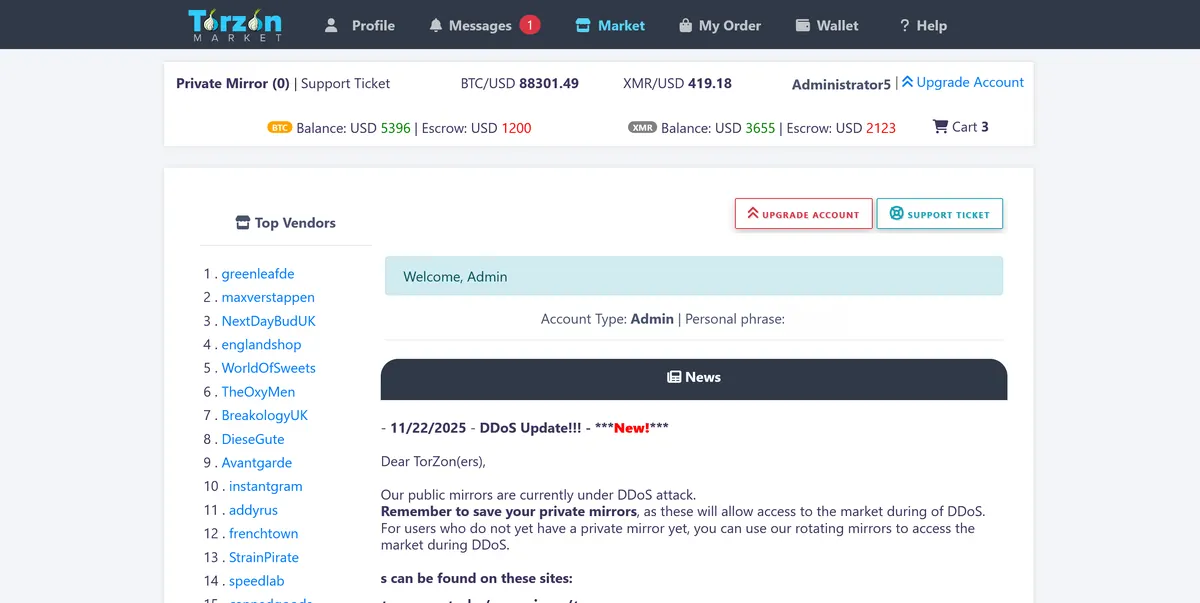
The dangerous version is a phishing proxy. It is a real onion service that sits between you and the genuine market, passing every page through unchanged, so the site looks and behaves exactly like the real one. It records your username and password, and it swaps the deposit addresses for its own. You log in, deposit, and the coins go to the phisher. Because the market itself is real behind the proxy, nothing looks wrong until the deposit never arrives.
Phishers make their addresses hard to spot by generating “vanity” onions that share the first several characters with the real one. A v3 onion address is 56 characters long, and most people only glance at the start. Matching the first six or seven characters takes hours at most on an ordinary computer. Matching all 56 is impossible.
Markets fight this the same way every time. They publish their current mirrors on their own onion, signed with the market’s PGP key, and post the same signed list on Dread. A buyer who already holds the market’s public key from an earlier visit can check any new address against a signed message. A buyer who first meets the market through a Google result has nothing to check against, and that is the person the clone sites are built for.
Each market page covers what is particular to that market’s clones: Black Ops has fake “official” sites that write the market a history it never had, Nexus has a whole network of promotional pages repeating one story, and WeTheNorth has clones that lean on Canadian branding. The useful onion links page covers how to check an onion address against its publisher.
How we know this
The closures of Archetyp and the RapTor operation rest on the U.S. Justice Department and BKA announcements linked on this page. The rest of the comparison, including launch dates, coins, and escrow design, is what each service says about itself or what public write-ups repeat, and we have not used any of these services. Item counts are numbers a service displays, not measurements, and where sources disagree we say so. The full rules are in our editorial standards.