What the dark web is in 2026, and what is actually on it
The dark web is the set of websites that only exist on overlay networks such as Tor, so an ordinary browser cannot open them. That is a small corner of the internet. The deep web, also called the hidden web, is something else entirely: every ordinary page a search engine cannot index, from your webmail inbox to a bank statement. Most people who type dark web or darknet mean the Tor markets, and those are a real part of it, but in 2026 the same overlay also carries forums, newsrooms, encrypted mail, ransomware leak sites, and a large clearnet scam industry that borrows its names.
Deep web and dark web are different places
You use the deep web every day. Computer scientist Michael K. Bergman coined the term in 2001 for content search engines could not reach: anything behind a login, a search form, or a paywall. Your email, your online banking, your company intranet, a patient portal, a paywalled newspaper archive. None of it needs special software, and none of it is secret in any dramatic sense. It just is not indexed.
The dark web needs a different network to reach at all. A site on Tor has an address ending in .onion that ordinary DNS does not know about, so Chrome or Safari cannot load it however you type it. The two terms blurred after Silk Road made the news in 2011, and the blur hardened when it was seized in 2013. Reporters wrote “deep web” when they meant drug markets, and the mistake has stuck in search ever since.
The iceberg picture you see in explainers, with the surface web as a 5 percent tip and the deep web as 90 percent underwater, is a cartoon. Nobody has measured the web that way, and the numbers get copied from page to page. What the picture gets right is the order of size: the indexed web is small, the unindexed ordinary web is enormous, and the dark web is a thin layer inside the second.
| Word | What it names | How you reach it | Common mistake |
|---|---|---|---|
| Surface web | Pages a search engine can crawl | Any browser and a search box | Thinking it is most of the web |
| Deep web / hidden web | Unindexed ordinary content | A login, a form, a direct link | Using it as a synonym for the dark web |
| Dark web | Sites that exist only on an overlay network | Tor Browser, or I2P and similar software | Thinking it is all markets |
| Darknet | The overlay network those sites run on | The same software | Treating the network and the sites as one thing |
| Clearnet | The regular web, seen from Tor | The browser you already have | Assuming clearnet means safe |
The word darknet is older than Tor. In the 1970s it meant machines on ARPANET that received traffic but did not appear in network listings or answer queries. A 2002 Microsoft paper on DRM reused it for private file-sharing networks. Since Silk Road it has meant, in everyday use, “the Tor markets”, which is how we use it here when the context is clear.
Tor is the darknet almost everyone means
Tor routes your traffic through three volunteer-run relays, encrypting it in layers, so the site you open does not learn your IP address and someone watching your connection does not learn which site you opened. It is maintained by The Tor Project, a U.S. 501(c)(3) nonprofit, and most people use it through Tor Browser, a hardened build of Firefox that you get from torproject.org and nowhere else.
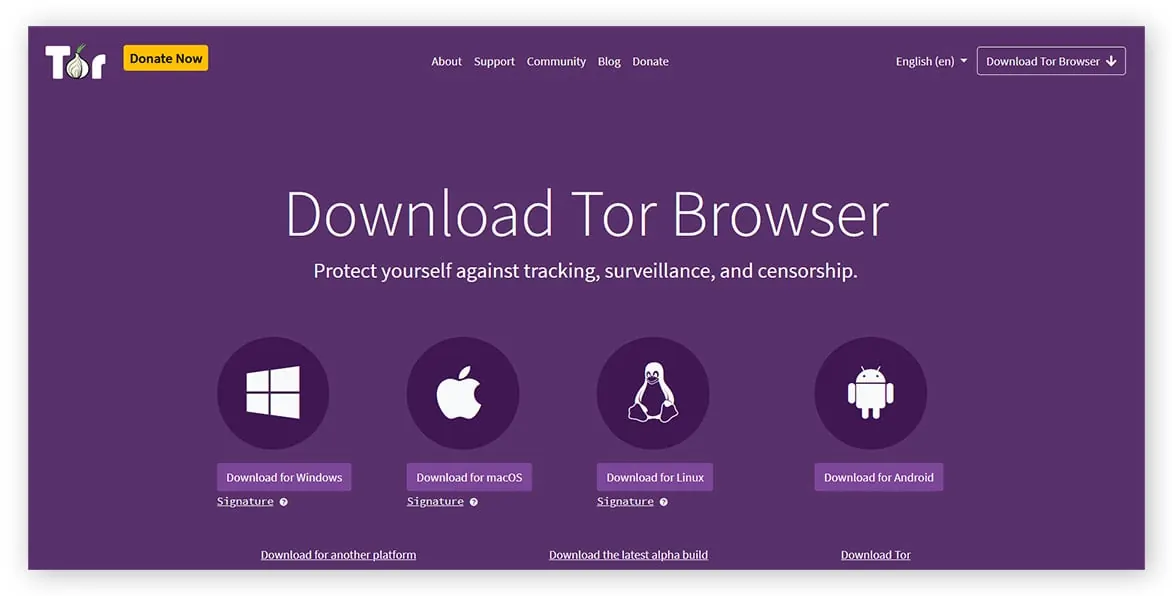
Tor does two separate jobs, and mixing them up causes most of the confusion around the subject. The first is private browsing of the ordinary web: open wikipedia.org in Tor Browser and your request leaves the network through an exit relay and lands on the normal site. That is not the dark web. The second is onion services, sites that live inside Tor and never touch an exit relay. Only the second is the dark web. Both look identical in the browser window, which is why people feel they “went on the dark web” when they only read the news through Tor.
Tor is not the only overlay. I2P has its own hidden sites, called eepsites, and a following among people who want a network built for services rather than browsing. Hyphanet, renamed from Freenet in 2023, is a distributed data store rather than a set of servers. Both are far smaller than Tor. The practical difference from Tor is design: Tor is built mainly to reach outside sites privately and added onion services for hosting, while I2P is built mainly for services inside its own network, with separate one-way tunnels for sending and receiving, as its technical introduction describes. For a reader following the markets, the question rarely arises, because they are on Tor. The markets covered here all run on Tor, though some forums and data shops sit on the ordinary web. The onion services that real publishers run, like the BBC’s, are collected on our useful onion links page.
Is using Tor or onion sites illegal?
In most countries, no. Downloading Tor Browser and opening onion sites is legal in the United States, Canada, the UK, and the EU, and in most other places. What makes something a crime is what you do there: buying drugs, stolen card data, or malware is illegal on Tor exactly as it is anywhere else. The network does not change the law that applies to the act.
A handful of governments treat the tool itself as a problem. China blocks Tor at the network level. Russia blocked the Tor Project’s website in December 2021 and restricts the network. Iran and several other states block or throttle it, which is why Tor ships with bridges, relays that are not publicly listed. In those countries, connecting to Tor at all can draw attention.
Two mistakes keep coming up. One is that using Tor is itself suspicious or illegal; that idea came from Silk Road coverage and it has never been true in most of the world. The other runs the opposite way: that because visiting is legal, everything you can reach is fair game. Neither holds.
Where Tor is legal, the useful split is between three activities. Using Tor Browser and reading onion sites is the ordinary case. Running a relay is also generally lawful, though the Electronic Frontier Foundation’s Tor legal FAQ notes that operators, exit-relay operators above all, can receive complaints and legal inquiries because the traffic appears to come from their address. The third is anything that is a crime off Tor, which stays a crime on it; how police shut down markets shows how those cases are actually built. The rules differ by country and change, so this is a map of the question, not legal advice. We are not lawyers, and the disclaimer says what Darkhelp is and is not.
What is on Tor in 2026: seven kinds of place
The dark web looks like a slower, uglier copy of the regular web: forums, storefronts, news sites, mail providers, file drops, and leak sites. Markets get the attention because they are what most people search for, but they are one kind of site among several. This is what you actually run into, and where we cover each kind in depth.
| Kind of place | What it is | Examples and where we cover them |
|---|---|---|
| English-language generalist market | Many vendors, crypto escrow, ratings, mostly drugs plus fraud goods. The Silk Road model. | Torzon, DrugHub, Black Ops; Nexus and DarkMatter until their September 2026 exit scams; overview on darknet markets |
| Regional market | Built for one country’s buyers, language, and currency | WeTheNorth for Canada |
| Stolen-data shop | Stealer logs, session cookies, card dumps, remote access | Russian Market, STYX, Brian’s Club, covered on stolen data shops |
| Market discussion forum | Reviews, scam reports, shutdown news, all in English | Dread, on darknet forums |
| Cybercrime forum | Malware, network access, leaked databases, mostly in Russian | XSS, Exploit.in, on darknet forums |
| Ransomware leak site | Where gangs publish stolen company data to pressure victims into paying | The corporate-security side of the dark web; see ransomware leak sites |
| News and mail onions | Publishers running their own sites on Tor for censored readers | BBC, ProPublica, Proton Mail; why they exist is on onion newsrooms, the list on useful onion links |
Two things show up in every “what is on the dark web” article and deserve a plain sentence. Child sexual abuse material exists on Tor and is a main target of police work on Tor. Hitman services and “red rooms” are scams or hoaxes; nobody has ever shown one to be real, and the sites that advertise them take the deposit and vanish.
Telegram is not part of the dark web, but in 2026 it carries a lot of what used to happen there: vendor channels, leak dumps, card shops. It is faster than a Tor forum and leaves no reputation behind, which suits scammers and puts off traders who depend on a reputation. The forums page covers how the two fit together.
How the darknet ecosystem fits together
“Darknet ecosystem” sounds like one habitat. In practice it is four separate businesses that share Tor, plus a scam layer on the clearnet that lives off their names. They have different buyers and different police units, and keeping them apart is the quickest way to make sense of any news story about “the dark web”.
The markets are the Silk Road descendants: many vendors, a market-held escrow, a rating system, and an operator who takes a cut of every sale. The cut is why every successful market ends up sitting on a pile of other people’s coin, and why so many end with the operator taking it. How that money works, from commission to exit scam, is on the darknet economy page.
Stolen-data shops look like markets but sell a different thing to a different buyer: logs from infected computers, cookies that let you take over a session, card numbers, logins to company networks. Their customers are fraudsters and ransomware crews, not people ordering drugs. When a security company publishes a list of “top dark web markets”, it is usually this layer it means.
The ransomware layer is what corporate security teams mean by “the dark web in 2026”. Gangs buy entry into a company network from access brokers, encrypt the systems, and post the stolen files on a Tor leak site if the victim does not pay. It does the most damage to companies and the part a casual searcher sees least.
The legitimate onions are the oldest use of onion services: newsrooms reaching readers behind national firewalls, mail providers, and tools like SecureDrop that let a source contact a journalist without being seen arriving.
The clone layer is not on Tor at all. It is clearnet sites that rank for “Torzon link” or “Dread onion” and hand out addresses, some copied, some swapped for phishing copies that steal deposits and logins. If you have ever searched a market name on Google, the first results were probably this layer. The markets overview explains how the clones work.
What changed in 2025 and 2026: seizures and exit scams
In 2025 the two biggest English-language markets disappeared inside a month: Archetyp was seized in June, and Abacus went dark in early July with customer funds inside, which almost everyone reads as an exit scam. In late September 2026 two smaller markets ended the way Abacus did, with withdrawals blocked and no police claim. Which markets are trading now, and how they compare, is on darknet markets in 2026.
| Name | Date | What happened |
|---|---|---|
| Operation RapTor | 22 May 2025 | 270 vendors, buyers, and admins arrested in ten countries; more than $200 million in cash and crypto seized. Built on servers taken from Nemesis, Tor2Door, Bohemia, and Kingdom Market. |
| BidenCash | 4 June 2025 | About 145 domains of a stolen-card shop seized by U.S. and Dutch authorities. |
| Archetyp | June 2025 | Seized in Operation Deep Sentinel; alleged admin arrested in Barcelona on 11 June 2025. |
| Abacus | Early July 2025 | Went offline with withdrawals frozen and no police banner. Treated as an exit scam. |
| Archetyp indictment | 3 August 2026 | German prosecutors charged the alleged founder: about 2.3 million orders and €330 million in turnover between November 2022 and the takedown. |
| Nexus and DarkMatter | 20–30 September 2026 | Both markets blocked withdrawals with no police banner. Treated as exit scams. |
The details of each case, and how to tell a real seizure from a fake banner, are on darknet news. A real takedown has a press release on a government domain; an exit scam has no agency page at all.
On the cybercrime side, 2025 and 2026 brought a run of forum seizures and arrests, including the July 2025 arrest in Kyiv of the suspected administrator of XSS, one of the oldest Russian-language hacking forums. If you came here from a security angle, that is the dark web you are asking about, and it barely overlaps with the drug markets.
Where to read next
- Which markets are trading, which are gone, and how they compare
- Darknet markets in 2026, with a page each for Torzon, Nexus, DrugHub, WeTheNorth, Black Ops, and DarkMatter.
- How escrow, commissions, finalize-early, and exit scams work
- The darknet economy.
- Why markets moved from Bitcoin to Monero, and what mixers do
- Darknet crypto.
- Seizures, arrests, and exit scams of 2025–2026
- Darknet news.
- Dread, the Russian hacking forums, and Telegram
- Darknet forums.
- How police take markets down, and what the closures have in common
- How darknet markets are shut down and the dated market history.
- Stolen cards, stealer logs, and what to do if your data is exposed
- Stolen data shops.
- Gangs that publish stolen company data to pressure victims
- Ransomware leak sites.
- Onion sites run by real publishers, and how to check an address
- Useful onion links, why newsrooms run onion services, and how to check a PGP-signed message.
Darkhelp is an independent publication with no connection to any market, forum, or service it writes about. Who we are is on the about page, and what Darkhelp collects about you (nothing) is on the privacy page.
How we know this
The definitions on this page follow the Tor Project’s own documentation, linked in the text, and the enforcement figures come from the U.S. Justice Department and German federal police (BKA) announcements linked in the table. The descriptions of the kinds of sites on Tor are general reporting: we have not visited the places we describe. How we separate a confirmed fact from a claim is set out in our editorial standards.